I was away on pilgrimage in Kraków and the surrounding areas for the previous two weeks. Today I am still reeling from the spiritual hangover and jetlag. Never mind. I shall write about the pilgrimage and see if it is any help.
This is my second pilgrimage (after
Lithuania in 2012) and also my first serious one. I went with 170 pilgrims in my group and 3 million from outside of the group. Putting this kind of number into a city designed for 700,000 is insanity and we are all very grateful to be alive at the end of all this. That aside, seeing the whole world packed into an open field, waving their flags, and celebrating mass together is quite a sight to behold. I meant especially the flags, because I am a huge flag nerd.
Yes, World Youth Day Kraków 2016 gave me a sensory overload.
It only makes sense, then, that my short pilgrimage reflections should be told with the help of flags.
1. Singapore
This is our flag. It is very pretty.
We had ~three of these things, plus the flag of the Archdiocese. I thought it was overkill at first, but later it proved useful to keep the 170 of us together in times of extreme moshing. It is also useful as a tool to explain to people that we are a sovereign country.
Someone asked me what the crescent meant, and I gave the politically correct answer.
2. Kazakhstan
This is the first flag I saw after stepping onto terra firma at Warsaw. A small group of people were wearing t-shirts printed with this flag. I was excited to see Kazakhstani folk in real life but also surprised that there were Catholics from there at all. It turns out that this country houses 1 archdiocese, 2 regular dioceses and an apostolic administration.
I almost shouted
Ай болсын! at them. It was not an appropriate phrase for that occasion, and I'm glad that I shut up.
3. United Arab Emirates
I was surprised to see the Pan-Arabic colours alongside ours when we arrived at Żory. It turned out that this group comprise largely of people who were Catholics from elsewhere and were at UAE to find work, not necessarily Arabs.
The Malayalee diaspora was represented prominently in this group and wherever Jesus Youth is involved. Masses at Żory were also graced by bishops from two of the Eastern Rite churches dating back to when St. Thomas was preaching in Kerala, the Syro-Malabar and the Syro-Malankara communities. The vestments they bore were ornate and blingy, and they stood out from the others. I received communion from one of them.
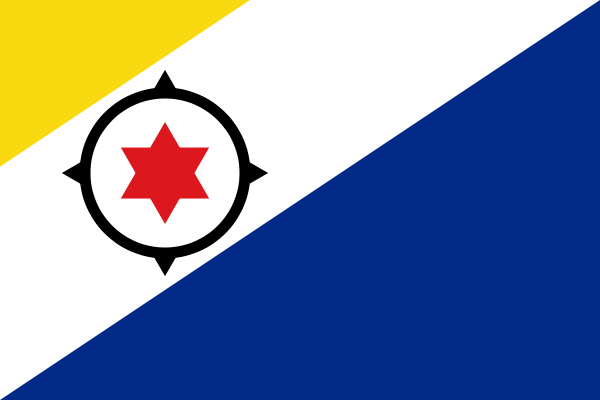
4. Bonaire and Curaçao
These flags were spotted at Muchowiec Airfield and stumped everyone, myself included.
The countries are island nations off the coast of Venezuela, and are part of the Dutch crown.
5. French Polynesia
A certain Tahitian religious sister ran into me and talked with me during one of those cultural workshops during the Żory festival. I met her and her group again later at Muchowiec Airfield.
French Polynesia is an overseas country (
pays d'outre-mer) of the French Republic and is in the remote South Pacific, roughly halfway between New Zealand and Chile. The main island is Tahiti, made famous to the rest of the world by Paul Gauguin paintings. Getting to Poland from here is a real pain, requiring a series of flights transiting at Santiago, Rio de Janeiro, and Paris. Some of the people there are descendants of Chinese immigrants.
6. Cabo Verde
Spotted at Auschwitz II and also later in Kraków.
These people live on a group of islands off the coast of West Africa, and speak Portuguese.
7. University of Nebraska-Lincoln
I ran into Fr. Benjamin Holdren (left in picture) of the Diocese of Lincoln while exiting the mosh at Błonia Park. Fr. Ben has helped me through tough times during my work stint at UNL last year, and also treated the parishoners to free donuts and coffee every Saturday after morning mass. One simply does not forget these things.
I said hi to him and went away too soon.
8. France and its traditional provinces
The French took a large proportion of pilgrims in this event and regional flags were one way of distinguishing between particular groups.
This is the "Gwenn-ha-du" (white-and-black) flags that identifies the Bretons, seemingly the largest group of French pilgrims.
This is Lorraine with a pretty flag featuring three weird-hawks.
The Corsicans used a variant of this flag with four of these Moor's heads around a red cross.
CORRECTION. Those aren't the Corsicans but the Sardinians, who come from a region of Italy
9. Canada and its provinces
Jeff Lockert, president of Catholic Christian Outreach, came from this province.
Spotted behind a wheelchair in Wadowice.
Québec people are French-speaking and that always gets me excited. They also have a nice flag.
Spotted at Wadowice.
10. Pairs of countries involved in ongoing vendettas but whose flags flew together nonetheless
The Mainland and Taiwanese groups came together to Poland and attended spiritual prep together before we found them, a fact which I found pretty cool. The Mainland is represented by groups from the Beijing, Handan and Macanese dioceses, among others (I hope). They had a bit of trouble coming because of paranoid bureaucrats and funny people showing up at their doorsteps begging them not to go.
I brought Pilgrim Kristin and her friend (both based in Bejing) to see my Archbishop. There we found out that she was a Teochew speaker. This reunion of sorts (Archbishop was also a Teochew speaker) took us all by surprise and cast a warm glow over the dusk at the airfield. One simply does not forget these things.
The Taiwan group was led by a Brazilian brother who spoke fluent Mandarin. He gave to me a foldable fan.
The Russian and Ukrainian flags were spotted flying side by side at Wawel Castle. Like, how cool is that?
A certain Father Laurentius from Flores serves in Volgograd and has been skulking about in Russia from the days of Perestroika. I tried to speak Indonesian with him, but failed. He recounted to Celine and myself about how the church has grown since the Soviet Union days, and invited us to visit him.
Father Laurentius was very boisterous, despite the crowd, and liked to shout Polish words at people. He had the dark skin and stout built of Flores men. I remembered the apparition of Our Lady at Larantuka, not too far away from his hometown, Maumere.
11. Easily confused flags leading to hilarious misunderstandings
The top flag is Hungary, where Pilgrim Julian studied for his Master's Degree and also home to my favourite classical composer (Béla Bartók) and many of the most badass mathematicians in history.
The bottom flag is Italy, where 95% of the pilgrims seem to have come from, so mistaking Hungarians for Italians was quite understandable (though not any less embarrassing).
12. Finland and Iceland
These two groups were small and stuck with each other at Błonia Park during Opening Mass and Papal Welcome. The Finnish group was made up entirely of Filipina ladies from St. Mary's Parish, where I called home for three months, four years ago. I asked them about the parish priest, Fr. Rafał Czernia, but they replied that he was somewhere else in the park.
I asked
Oletekko Suomalainen? to one of the Icelandic priests by mistake. He laughed, and then redirected me to the ladies at the Finnish banner. But I still failed, because by then my Finnish language is close to nonexistence.
My favourite author of all time (Halldór Laxness) was an Icelander and also a Catholic for a period of time. One of the rooms at his house at Mosfellsbær, which is now a museum, has a blessing from St. JP2 hanging on the wall. One simply does not forget such things.
13. Sweden
I met the Swedish pilgrims during the mosh after Opening Mass. They were a group of girls from Uppsala. I tried my Swedish on them for two lines, but in the end English was still more practical for communication. Such is life.
14. Pakistan and Bangladesh
I remembered hearing before the trip that the pilgrims who wished to come to Poland from Pakistan and Bangladesh had had their visa applications rejected. However, during one of the moshes in Kraków, I saw these two banners being unfurled again. Good for them. They probably found a way to apply from a third country, like what the Syrian pilgrims did.
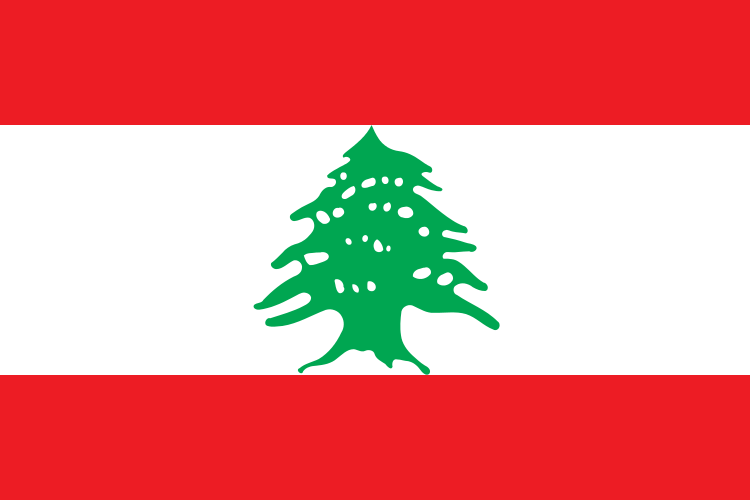
15. Lebanon (also Syria)
The dude who bore the Lebanese flag turned out to be from Syria; from Aleppo, a beautiful town. He had managed to come to World Youth Day after applying for his visa in Dubai, because nothing works any longer in Syria. After a while he looked very sad and did not want to talk about anything anymore.
16. Barbados
Note: Barbados is secretly Atlantis.
Spotted at Muchowiec Airfield.
17. Slovenia
Spotted at Campus Misericordiae.
The Slovenians performed an act of charity during the Vigil and Closing Mass. They set up shop at the boggiest corner of our sector and made a cordon of bottles and sticks and raffia strings to prevent the others from stepping into the mud by accident. One simply does not forget such things.
18. Costa Rica
The favourite stereotype bore by the Costa Ricans was the exclamation
¡pura vida! and you could yell that at them just to make them happy.
Sr. Cecilia, who journeyed with a group of us on a mission trip to Tagaytay 2 years ago, is based here now, and probably speaks flawless Spanish.
19. Honduras
Pilgrim Laura from Honduras sat next to me on the flight from Warsaw to London, and we commiserated on the sad state of Polish public transport. Pilgrim Laura studies in medical school in San Pedro Sula. She loves her country, and thinks it beautiful. We talked about many other things.
20. Belarus
This is the flag of Belarus, a country bordering Poland to the east and the last European country (for now) to host a mad dictator.
The Belarusian contingent at Campus Misericordiae also uses the white-red-white
variant of the flag, which is interesting, considering the fact that it
is used as a protest flag.
During Vigil Night, I shared a most blessed moment with the Belarusian youth, religious sisters, and priests in a tent where the Blessed Sacrament had been exposed.
At first, I had scant intention of going for adoration. I went into the tent really just to keep myself warm in the night, where the alternative was to sleep out in the field without a sleeping bag. I had thought (prayed) a little about it and reasoned that by not bringing a sleeping bag to the Campus, I had in fact betrayed a deeper desire to keep the vigil rather than to get any sleep. I prepared myself with coffee and a warm tub of pierogis from the stall.
I began kneeling outside of the tent entrance, careful to step around the sleeping men next to the tent (who must be so lucky to sleep there, close enough to be dreaming of Jesus even!). I followed the Divine Mercy chaplet sung in a strange language which I assumed to be Polish until I managed to obtain a lyrics sheet.
All the lyrics were in the Cyrillic alphabet. I could not contain my glee.
On closer examination, I spotted the letters
Іі and
Ўў
which indicate
Belarusian.
The nicest thing about Belarusian spelling is that
words are pronounced exactly like they are spelt, in contrast to Russian.
The songs themselves were beautiful and I sang along whenever I could. I made notes on my sheet on which of the songs were sung, for future reference. I even made a few discreet voice recordings. I have never been able to find many of these songs again in recorded form. The songs were probably really just meant to stay with me for the moment only. Such is life.
I expressed profuse gratitude to one of the guys (Pilgrim Viktor, if I remember correctly) who played guitar. I asked to keep one sheet of lyrics and in return I gave him a medallion with an image of the Cathedral of the Good Shepherd embossed behind. And the sunrise happened and shone upon the altar and shone upon the Blessed Sacrament.
I used to like to think that I am leading Him by the hand and going to people in need of him. Now I knew that it was He who has been leading me by the hand after all. He led me into this wonderful place and among these wonderful people and I had no idea what was in store for me. What have I done after all? I had only prayed a little, and then watched from the back seat as the scenery unfolded before my eyes.
After this relevation happened, I took some time to collect myself and prepared for Closing Mass. And the Holy Father breezed by in his buggy and life returned to normal soon enough. Just Kidding.