Wednesday, July 12, 2017

Martin of the Field of Pines

I arrived in Europe again once too often, this time for an academic workshop and then a short road trip around the Iberian peninsula. This is a very hasty overview of our story. We were at Cantabria, Portugal and then Sierra de Gredos and were very happy, collecting many memories and stories. I record them here so that we can have a look at them on gloomy days.


The trip was long and varied and is best organised into three parts, each one dedicated to an appearance made by our Heaven-Mom at the three different corners of Spain and Portugal where we went to. Each part has its own share of short and sweet stories which do not necessarily weave into a huge overarching narrative, and I keep them as such.

I. Garabandal
Madrid, Santander, Zurita, Las Presillas, and San Sebastián de Garabandal

The Adventures of Mom at Garabandal: It is said that Our Lady of Carmen appeared to four young girls at Garabandal several times from 1961 to 1965. The girls were so excited to see her that they spent their time with their necks constantly craned to the heavens, even while walking around, running up and down the hill behind the village, etc. The villagers passed to them things which needed Mom's blessing, and were happy. A certain Father Luis Marie Andreu also had a glimpse of Our Lady of Carmen, then died of happiness during the night. Today, the story has been kept alive by her devotees, especially the media-savvy religious siblings of Hogar de la Madre who made us go to Garabandal after we visited them.

San Sebastian de Garabandal from the hilltop

The story of Michael the Brazilian: Michael the Brazilian took a lift in our car to reach Garabandal. He had been walking uphill from Cosío, roughly 3 kilometers away. He came to the village once upon a time and then decided to stay there for 5 years. He could not understand my Portuguese.

The story of Zurita: Hogar de la Madre, or Home of the Mother, was started by a mystic they call Mamie and a priest called Fr. Felix, if my memory serves me well. Publishing and painting became the forte of these people. A cluster of printing presses were donated to them, and they have used it to print magazines for subscribers everywhere, as far as I can tell.

Mass happened here
We learned that an icon is not so much painted out by the artist, but prayed out.


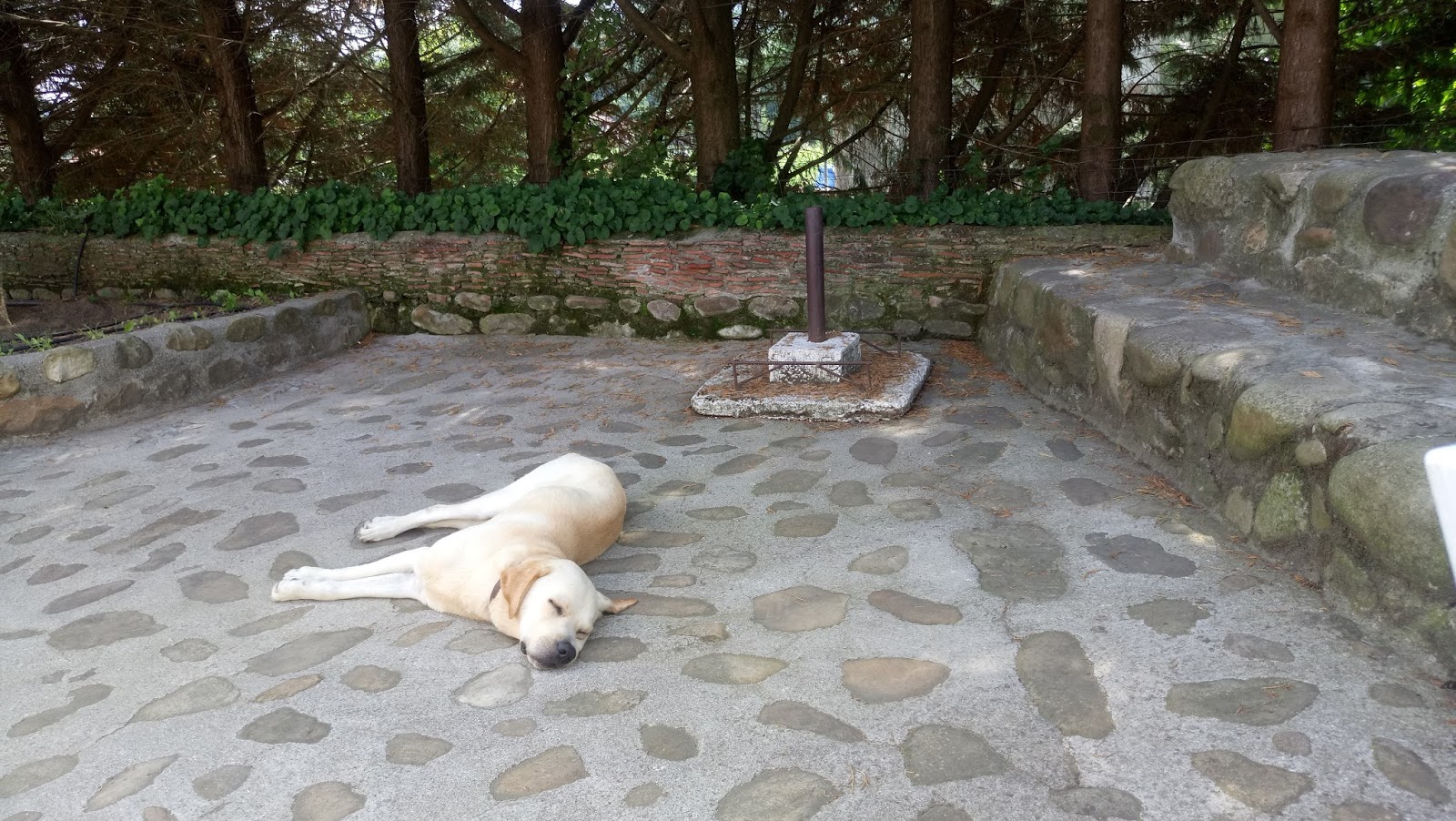
The sisters keep two dogs as rat predators. The sprightly one they call Andalo, in honour of Andalusia a.k.a. the Real Spain. The name of the lazy one I could not remember, but the name meant "Rug". The brothers kept a cat.

How to reach Garabandal by car: The best way to reach Garabandal by car from Santander is to turn into the Río Nansa valley road from A-8 at Pesués. This was the route pointed out to us by the sisters at Hogar de la Madre. The route suggested by the navigation system, on the other hand, took us through a very annoying journey with mountain roads. 

How the landscape in Spain changes during long drives, Part 1: Cantabria, also known as Green Spain, is very green and very picturesquely slopey. A tunnel or viaduct is encountered here every few minutes or so. As you go south, the mountains taper off gradually and then one is confronted with a vast arid plain in the provinces of Palencia and Valladolid which stretches all the way up to Salamanca. After Salamanca, as one approaches the Portuguese border at the town of Fuentes de Oñoro, it becomes (if I remember correctly) a rolling terrain where trees (cork? holm oak?) are planted in neat ranks and files. By the time one has driven into Portugal, behold: There comes again a pleasant green rolling itself across the land again, like a milder, less menacing Cantabria.

Water prices: were higher in Madrid and Toledo than they were in the wetter parts of the country, as is expected. Wine is often cheaper. Food is expensive but is usually worth it. Usually.

II. Fátima
Salamanca, Fátima, Aljustrel, and Lisboa

The Adventures of Mom at Fátima: The story of Mom at Fátima is long and illustrious and readily available at more reputable sources than this one. Tom Hoopes of Aleteia wraps it up succintly, saying that 13 July 1917, the day of her apparitions, "was the day Our Lady scared the daylights out of three shepherd children by showing them hell and sternly warning them about a second global war and a new age of martyrdom." As it happened, WWII came and passed, the Soviet Union came and passed, and St. Pope John Paul II was shot at and almost killed (by a hairsbreadth) by a Turanist lunatic in 1981, all in fulfillment of her prophecies. The fanfare surrounding the town of Fátima this year is due to it being 2017, a neat hundred years after the first apparitions. Posters welcoming the Pope during his previous visit are still plastered around town, but the lull of pilgrims in late June is something to be appreciated.

The scaffold put up at Cova de Iria, with the Basilica belltower
The Rosary: I was used to a simple night rosary session with around 7 friends in a Google Hangouts chat. I mistakenly assumed that the same would happen at Fátima, a place which receives around 5 million pilgrims every day and is also responsible for a permanent new addition to the Rosary itself. It turned out to be a huge fanfare, five decades led in two languages each, followed by a procession where a statue was dragged out to circle the sanctuary complex with four bajillion people with crowd control, then concluded by the Salve Regina (I wasn't sure when it was going to end).

I usually didn't think it decorous to take pictures of Rosary sessions, but here you go. I took a picture. Here be candles galore.


The Knee Walk: Esther from the summer school had heard of Fátima. "They are crazy," she said. "They do that thing where they walk on their knees down a path." The knee walk here is something pilgrims do out of sorrow and penance for sin. I can now verify that it is very crazy indeed. The abrasions that I earned from the walk took days to heal. However, at least one very resourceful pilgrim has been spotted doing the walk with kneepads. This is something that potential pilgrims should take note.

A Day Mass Where We Spotted A Priest Who Resembled Fr. Ben Holdren of Nebraska So Much That I Just Can't believe how we keep on winding up in the same country. As I had mentioned in this blog here and here, Fr. Ben Holdren gave me doughnuts and heard my confessions during a very low point of my life. I still have not gotten over it. I must testify also to the healing power of doughnuts.

The girl got some candles after mass. They smell very nice. She lit them, placed them very carefully into the candle holders where they offer the candles, and offered a prayer for each one. At that time the fires were licking at the stands and melting the candles so that they bent over and rested on the next tier of candle holders, as if taking a seat. They burned so fiercely that I wondered if one should just throw the candles into there and run away as fast as they could.

I prayed also for the Sisters and Brothers of Hogar de la Madre, as promised.

The Adventures of Cow In The Oven: Clara and Sérgio Patrício run a good restaurant near the place we stayed. The name of the restaurant is Santa Rita, and they serve Portuguese food from the Azores. The food, especially the one named Vitela (or Cow In The Oven in the English menu), brings a tear to me eye.


I wrote a review on Google for them, as promised. This is how it goes:


The Adventures of the Lu (路) Family in Fátima: The Lus run the Restaurante Si Hai next to the Patrícios' restaurant, and keep it open way into the night. Mr and Mrs Lu had decided to travel to Fátima from Shandong to open a Chinese restaurant out of a acute sensitivity to business opportunities. They receive the many hungry pilgrims who come to Fátima from Malaysia and Indonesia on huge tour buses every day. A lady from Singapore arrives regularly to help with the cleaning-up, and other regular visitors come to lodge with them during high seasons. The couple are not believers, but a small icon of Mary watches the place day and night.

Their two children attend school in the town and are taught things in Portuguese. English language schools, much preferred by Chinese expats, are available in the capital, but it was not thought worth it to send them there.

The Adventure of the Tart Run: Tart run happened one day after the girl heard of the famous Pastéis de Belém and wanted to try their tarts. So off we went to Lisbon. Lisbon drivers were the worst. We walked to the famous Pastéis de Belém past the statue of a pompous dude stuck on a tall column surrounded by four marble wenches bathing in public view. A huge clamouring queue of people from all over the world can be seen at the entrance of the bakery (custard tartery?), but the purchase was over in 10 minutes or so. The custard tarts were nice and it was a happy day.

Gas prices: are much higher in Portugal than in Spain. I never figured out why this is the case.

III. Chilla
Candeleda, Mombeltrán, Navalsauz, Ávila, Oropesa, and Toledo


The Adventures of Mom at Chilla: It is said that the Virgin of Chilla appeared to a certain goatherd Finardo, who lived at Candeleda during the seventh century, and revived his dead goat. In gratitude, the Candeledans built a chapel where she appeared, and made her their patron ever since. Her icon can be seen plastered in every shop in Candeleda. The Candeledanos used to remember more about the Virgin of Chilla, but the written records had been thrown in a well during the war with France and were gone for good. Despite this setback, the devotion has continued unabated.

Why we ended up in Candeleda, and an explanation for the title of this entry: We had intended to lodge at the Sierra in the village of San Martín del Pimpollar before our stay, but I changed the booking because the villagers wanted to have some fun playing music to the wee hours in the morning for the two straight nights we were due to be staying there. The manager of the guesthouse of San Martín del Pimpollar, Juan Francisco Redondo Sánchez, was a good person and had tipped us off about it in advance.

The name Pimpollar translates literally to a place of pimpollos -- "pine-chickens", or saplings of pine. During one of our day trips, we managed to descend upon the hapless Pimpollarese (who were expecting anything but tourists on that quiet day) by visiting their parish church at Navalsauz, a sweet old edifice with a bell.

Ricardo and Toñi's Fabulous Guesthouse: Having been scared off the north slope of the Gredos, we took refuge on the south, at a place I chose because the website said it had air-conditioning. This is Casa Rural la Josa, a guesthouse of 6-ish rooms outside Candeleda along a one-lane dirt path up the mountain which is really fun to drive up in.


Ricardo de la Vega, a spunky septuagenarian, and Antonia "Toñi" Velasco Serrano, his wife, live here together and run the guesthouse and spoil their guests rotten with food and company. They share their space also with a family of five cats (3 of which are smol kittenz), and their children and grandchildren came to visit them on Saturday afternoon.

Smol kittenz were too smol to be seen
Dinners happened on a terrace where one could see the plains to the south, as far away as the Montes de Toledo. There was one evening when a column of smoke in the plains, and Ricardo called the fire department; he just so happens to be so uniquely situated that he could regularly spot and report fires raging in the neighbouring province. Toñi emerged from the house twice, once to say hi and once to say bye. She introduced herself in German for some reason.

One sees right into the Castilla-La Mancha bit of Spain, up to the Montes de Toledo
Afterwards, while driving along the Río Tiétar, I noticed scorched earth on the side of the road. Random fires seemed common in Castilla-La Mancha in the summer. We were lucky not to have run directly into one.

How the landscape in Spain changes during long drives, Part 2: Sierra de Gredos is a tolerable alpine climate this summer, meaning that it does not reach the temperatures of a blast furnace, as what has happened in lower-altitude cities in New Castille such as Madrid and Toledo. By driving down to Toledo one approaches the region of La Mancha, which is a strange and unforgiving habitat where green things have all but given up being alive. Not having ventured very far into that area, we failed to spot any windmills or Don Quixote, but nothing has indicated to us that such things might not be lurking somewhere just out of sight. Gas stations are harder to find here.

Cities and Towns around Candeleda: We drove up the mountain pass to Ávila. Along the way there were Mombeltrán and Puerto del Pico, at 1300 m. Mombeltrán had a castle which we could not go into, and Puerto del Pico had cowpats scattered across the cool alpine field. A memorial to the Fallen of Spain have been set up here. This spot seems to be a start point of a route that hikers take to Pico Almanzor, the highest point of the Sierra.

The Fallen of Spain (some letters missing)
The (same?) cows were spotted crossing the street in the afternoon as we approached Arenas de San Pedro, but we were not sure why they did so. They were escorted by some fine cowboys.


Ávila has a neat old wall. This is the first thing one learns of Ávila. The second thing that one learns of Ávila is that St. Theresa of Ávila came from Ávila. Her headquarters here has been very blinged-up, and it even came with a souvenir store managed by grumpy storekeepers.


Lunch was at a very well-reviewed Portuguese restaurant. They had cod also, but it wasn't Spiritual.

Walls are an ever-looming presence in this town, and so we pay a visit.


The first thing one learns of Toledo is that the ground here is paved with murder weapons.


The second thing one learns about Toledo is that the old Mozarabic rite masses are still performed here, a relic reminding us of how Christians here used to do things when the Umayyad Caliphs were in charge of the Iberian peninsula. Masses in Mozarabic rite happens only on Sunday mornings at the Cathedral.

The third thing that one learns about Toledo is that it is epic. It came with its own soundtrack which is played in a loop at Plaza del Salvador, and people who lived there had to listen to it all day. Cloth draped over the pedestrian streets kept it cool, and flashmob dancing happened left and right made sure that we were reminded and thoroughly convinced of the city's epicness.


Oropesa lies along the way to Toledo. They have there a nice view of the Sierra. The walls here are painted with intricate storylines by the local schoolchildren. The locals liked to visit the castle.


Candeleda is a place populated by the elderly, one of which told us that we were a cute couple. A river flows through the town. It is presently dried up in the absence of meltwater, but a trickle still passes by the round polished boulders. When one bends over one of the lagoons, they would be able to see fish lurking in them. What carefree creatures these must be! And at that moment the sun shone on us and kept us just the right degree of warm.


And my story ends here
this is as much as I am able to put to keyboard now
There is much more to say, if I recall them, but you might have to find me in person
for me to get started on the yarn. It's just in the nature of stories.
I'm tired. I have to go now.

Appendix I. Events
17-18 June: One extremely hot and stressful day in Madrid
18-24 June: IEEE Summer School 2017, Santander
25 June: Visit to the Sisters/Brothers of Hogar de la Madre at Zurita and Las Presillas, impromptu trip to San Sebastián de Garabandal for a rosary
26 June: Long car trip to Fátima via Salamanca
27 June: Epic Night Rosary at the Sanctuary complex
28 June: Tart Run (short crazy car ride into the capital)
29 June: Medium-length car trip to Casa Rural La Josa, a guesthouse outside of city boundaries of Candeleda, at the south slope of the Sierra below Pico Almanzor
30 June: Day trip to Ávila, passing by Mombeltrán, Puerto del Pico, and Navalsauz
1 July: Walking trip to Candeleda
2 July: Day trip to Oropesa and Toledo
3 July: Departure from Spain

Appendix II. Mass locations
Sunday 18 June: Almudena Cathedral
Sunday 25 June: Hogar de la Madre, Zurita
Wednesday 28 June: Sanctuary of Fátima
Sunday 2 July: Primate Cathedral of Saint Mary of Toledo

Thursday, December 15, 2016

Maps of Catholic Church Top-Level Jurisdictions (Latin and Eastern Rites!)


I made a map of the top-level divisions of the worldwide Catholic Church based on Sasha Trubetskoy's earlier work, fixing a few of the errors in the earlier map by delineating some of the new (and old) missionary territories in basically all the continents.


Here also is a map wherein the different types of top-level jurisdictions are coloured by type.
UPDATE: The Ethiopian Latin church territories are delineated in this map and the Alexandrian Rite is shifted to a new map.

Points of ambiguity:
Macau: The Diocese of Macau today only administers the Macau Peninsula, not the inland Guangzhou Province areas.
China: The approximate Vatican-recognised diocesan map of China is taken from this link. The de-facto organisation today follows the present provincial boundaries more closely e.g. the Archbishop of Changsha also administers the other dioceses throughout Hunan province, even the exempt Prefectures.

Click to enlarge
Kenya: The Apostolic Vicariate of Isiolo is taken to cover the district of Isiolo
South Africa: The Apostolic Vicariate of Ingwavuma is taken to cover the uMkhanyakude district in KwaZulu-Natal. Interestingly, the websites quotes this area as suffragan to Durban Province.
Libya: No sources are available on how the territories are split up between Tripoli, Derna, Benghazi and Misurata.
Nigeria: The map takes the Apostolic Vicariate of Bomadi to cover Delta State and the Apostolic Vicariate of Kontagora to cover Niger State. The real boundaries are most likely different (Bomadi also has parishes in Rivers and Bayelsa States).
Ethiopia and Eritrea: Eritrea has no Latin rite jurisdiction. The Alexandrian Eparchies of Ethiopia do not overlap with the Latin Apostolic Vicariates (and Prefecture) in the country.


Norway: Approximate boundaries drawn between Oslo, Tromsø, and Trondheim with reference to this map.
Hungary: The Abbacy of Pannonhalma has a number of very small exclaves, which I have not included in this map.

Other changes added to original map:
Mission Territories in Central and South America: Delineated boundaries for Apostolic Vicariates in Venezuela, Colombia, Ecuador, Peru, Bolivia, Paraguay, Guatemala, Chile (Aysén) and Panama (Darién).
Missing jurisdictions: Added Province of Papeete (French Polynesia), Province of Malta, Mission Sui Iuris of Saint Helena, Ascension and Trista da Cunha, Diocese of São Tomé and Príncipe, and Apostolic Vicariate of San Andrés y Providencia to previously empty ocean.


China: Xinjiang, Xining, and Hainan are independent territories, whereas Tibet is under the Diocese of Kangding (Chongqing Province). Again, I referred to this link for the many changes.
Bhutan: Bhutan is part of the Diocese of Darjeeling (Calcutta Province)
Switzerland, Laos, Cambodia, Timor-Leste: All dioceses and territories are exempt.
Indonesia: Riau Archipelago islands are under Palembang Province (earlier map mistakenly mis-assigned islands to Medan and Kuching). The Diocese of Weetebula (Sumba Island) is suffragan to Kupang (previously mis-assigned to Ende).
Pakistan: The Apostolic Vicariate of Quetta is exempt.
Thailand: The Diocese of Chanthaburi is suffragan to Bangkok.
Scotland: Glasgow Province occupies a very much smaller territory (previously also mistakenly included Galloway and Borders areas).
Faroe Islands: part of the Diocese of Copenhagen (previously mis-assigned to Province of Edinburgh and St. Andrews)


Australia: The Archdiocese of Canberra and Goulburn occupies also a sizeable part of NSW, and the Northern Territories are covered under Diocese of Darwin, which is in turn suffragan to Adelaide.
Sakhalin: The Apostolic Prefecture of Yuzhno-Sakhalinsk is exempt (previously included in Moscow Province).
Italy: The (very small) exempt territories in the vicinity of Rome are delineated (previously included in Rome Province).
Greece: The Apostolic Vicariate of Thessalonica is exempt.
France: Metz and Strasbourg are exempt.
Argentina: The Archdiocese of Mercedes-Luján is exempt.
St. Pierre and Miquelon: The Apostolic Vicariate of Iles Saint Pierre and Miquelon is exempt.

Eastern Rite Catholic Church Maps:

Byzantine Rite: Albanian, Italo-Albanian, Bulgarian, Belarusian, Greek, Hungarian, Macedonian, Melkite, Romanian, Ruthenian, Russian, Slovak, Ukrainian and Byzantine (In Croatia, Slovenia, Bosnia-Herzegovina and Serbia) Catholic Churches


Alexandrian Rite: Coptic, Ethiopic and Etitrean Catholic Churches, each with their own province


Armenian Rite: Armenian Catholic Church


Antiochian Rite: Maronite, Syrian and Syro-Malankara Catholic Churches (with detail)


Syro-Oriental Rite: Chaldean and Syro-Malabar Catholic Churches (with detail)


References:
Sasha Trubetskoy: Catholic Provinces: Redux
Catholic Hierarchy.org
GCatholic.org
Dominus Vobiscum (Sina)

Wednesday, September 28, 2016

Johnny's Lament

Is this Johnny?

A small fable.

Johnny cries out in confusion:

I have dated her for a year and more
But still I don't understand her thoughts
Whenever we are together, she licks her lips hungrily.
She comments on my scent, my taste, my seal of freshness.
Whenever we go to the kitchen, she tries to shove me into the microwave.
Who am I to her?
Am I to her a serving of microwavable lunch?
Specifically, the meatballs that you could buy in IKEA?

I am confused, because who am I?
Am I Johnny, who lives, works, plays and loves?
Or am I fifteen balls of mincemeat
So succulent and full of Swedish goodness?
Does she love me for who I am?
Or does she love me because I go well with lingonberries?
Am I in the wrong that I resist being reheated?
Was I born to be served with gravy and mash?

And the one who made Johnny replies:

Johnny, look, I am in the business of making meatballs
And you are certainly not one of them
It is not in your blueprint to merely taste savoury and delightful
Look! I gave you a family to love and a beating heart
I gave you eyes to see and ears to hear
I gave you hands to wield axes and make ploughs
Do you understand? I made you to fell forests and raise nations
Meatballs past their expiry date will surely be cast into the dark
But you, Johnny, you shall come back to me and live.

And so Johnny replies:

Blessed is today that the blueprint is revealed to me
Here is who I really am, my purpose and my heart's desire.
I will shed my deceitful carton, my brand, my nutritional info;
I shall disregard the lewd liars in the street
Who call me names like KÖTTBULLAR and GRÄDDSÅS
And walk in my maker's wonderful light.

Sunday, September 11, 2016

Amatodate

Putorana plateau, 2013 [source: dikiy.me]

Whenever one went southwards from the Rumelian lands, one thing which would swiftly become apparent was that there was good reason why no one, even those who lived in the furthest south of the realms, would venture back in the direction their ancestors came by. It was a plateau which, at the place where Irannika's grandmother lived, loomed over the lowlands as a huge cliff wall stretching many hundreds of miles. The ones who had come to Rumelia during the Settlement of the North must have had arrived here after a large detour around the landform, and had probably since forgotten the way back. In any case the plateau itself was a place of serious taboo; the land yielded scant life, being in most places a rocky terrain covered in most places by a blanket of lichen, and it was said to be infested by ghouls, pripyatines (people of an untouchable caste), mutants and the few bandits who remained undaunted by the previous, making them all the more ghastly and formidable. The demon Lenin, who in his living days had cursed Rumelia three feet into the sod since the days before the Settlement, continued to hover over the plateau as a perennial, malevolent presence.

What the Rumelians miss, since they were so intent of looking elsewhere, was that this barren highland housed a place of sanctuary. If you asked anyone living there and was lucky to find a human being who also happened to speak in human tongues, they would know it as the Abbey of Saint Francis of Amatodate, the Amatodachi Piran-senpashe Kerka. The abbey is immediately recognisable as a cluster of hewn-rock buildings, almost a fortress, always next to a freshwater lake somewhere in the featureless landscape. It was unique not only as one of the rare few sedentary establishments in a country ruled by life of the more nomadic sort, but also a place of mystery that some looked to as solace and other looked to with incomprehending dread.

It is useful to think of the abbey not simply as a building, but as a group of people who maintain it: an order, if you will, of men and women who vow to follow the way of Saint Francis of Amatodate and to maintain a place of refuge in a cruel country, giving protection to people threatened by violence and food for the starving. The members of the Order of Saint Francis of Amatodate follow a curious double life: one one hand, an intensely contemplative life of masses, hourly prayer and adoration, centered on the worship of the Yeshua; and on the other, a rugged tenacity, and a special bloodlust reserved for any miscreant who would come to upset the peace of the sanctuary. And miscreants were all too common, for among the brigands circulated a legend that the abbey housed a cornucopia, in the form of an pot, a basin, a silo, or even a small cup (no one is really sure) from which the Order can readily procure any amount of edible grain as was asked. By this rumour, the legendary object became the object of greed and a target of plunder of the people across the region.

Procuring this cornucopia, however, was no simple feat. Few attempts at overrunning the warrior monks, armed to the teeth with vicious improvised weapons, actually succeeded. There are few among the pripyatines who hear of the cornucopia to cast a curse on those who have acquired it by force; only the Order could reap any benefit off it, and it provided only as much as asked for. The raiding party who seized the cornucopia would invariably be confronted with an empty, useless vessel with no discernible powers whatsoever. There was once a group of brigands who had reached the cornucopia, then in the form of a grain tower, after murdering the entire Order in their sleep. When it became clear that no more food was ever to be found springing from the silo, they became so disgusted and enraged that they had the cornucopia, and along with it the abbey itself, doused in vodka and burned to the ground. The pripyatines say that they have never heard from them since, not that they're sure that they had even left the abbey when its buildings were completely consumed by fire, it seemed.

Curiously, the abbey always restored its presence, even after instances of complete extinction. A new abbey would always emerge, built by human hand not too away from the ruins of the previous abbey and always next to one of those beautiful lakes in the mountains. This would always be accompanied by a whole new posse of divinely inspired individuals who often seemed to appear out from nowhere and who were ever armed with a fervent focus on peace and charity, carrying the torch of Saint Francis of Amatodate. It was through such inexplicable reincarnations that the Order propagated itself through the ages.

A clue as to whence these people came from could probably be found in a story told by the pripyatines which dated to the earliest days of the Order, back to the days of the Settlement. The first Order of Saint Francis had been a group of Korean monks and sisters who built the abbey by a glacial lake in to remember their former abbacy, wrested from them by the fiend Lenin and his minions in a period of great spiritual strife in Korea. After a few years, these first members of the Order were then murdered by a group of Japanese-speaking robbers, who took over the abbey and took to maximising its capabilities as a fortress, hoping to use it as a defensive ground against rival gangs. After the leader died, his charismatic next-in-command was ushered in to lead the band. The new leader was who people later named the Piran-senpasha, since it was he who compelled his compatriots lay down their arms, convert to the Christian faith, and thenceforth lead dedicated lives of prayer and charity.

The abbey had been named Vuokuan by the Koreans, after the location of one of their locations back in the country. This was changed in Piran's generation to Amatodate, a name alluding to the ancestral homeland of the abbey's new owners. Even though since that time, for three thousand years, vagrants, exiles of many tribes and races had taken their turns to repent and answer their life callings in the Order of Saint Francis of Amatodate, the names themselves have been preserved to the present day, and the conversion of Piran and his fellow murderers at the abbey continues to be recounted in local folklore, being at once a sign of defiance and a thorn in the side of the fiend Lenin.

Sunday, August 07, 2016

Kraków Pilgrimage Story, told in Flags

I was away on pilgrimage in Kraków and the surrounding areas for the previous two weeks. Today I am still reeling from the spiritual hangover and jetlag. Never mind. I shall write about the pilgrimage and see if it is any help.

This is my second pilgrimage (after Lithuania in 2012) and also my first serious one. I went with 170 pilgrims in my group and 3 million from outside of the group. Putting this kind of number into a city designed for 700,000 is insanity and we are all very grateful to be alive at the end of all this. That aside, seeing the whole world packed into an open field, waving their flags, and celebrating mass together is quite a sight to behold. I meant especially the flags, because I am a huge flag nerd.

Yes, World Youth Day Kraków 2016 gave me a sensory overload.
It only makes sense, then, that my short pilgrimage reflections should be told with the help of flags.

1. Singapore


This is our flag. It is very pretty.
We had ~three of these things, plus the flag of the Archdiocese. I thought it was overkill at first, but later it proved useful to keep the 170 of us together in times of extreme moshing. It is also useful as a tool to explain to people that we are a sovereign country.

Someone asked me what the crescent meant, and I gave the politically correct answer.

2. Kazakhstan


This is the first flag I saw after stepping onto terra firma at Warsaw. A small group of people were wearing t-shirts printed with this flag. I was excited to see Kazakhstani folk in real life but also surprised that there were Catholics from there at all. It turns out that this country houses 1 archdiocese, 2 regular dioceses and an apostolic administration.

I almost shouted Ай болсын! at them. It was not an appropriate phrase for that occasion, and I'm glad that I shut up.

3. United Arab Emirates


I was surprised to see the Pan-Arabic colours alongside ours when we arrived at Żory. It turned out that this group comprise largely of people who were Catholics from elsewhere and were at UAE to find work, not necessarily Arabs.

The Malayalee diaspora was represented prominently in this group and wherever Jesus Youth is involved. Masses at Żory were also graced by bishops from two of the Eastern Rite churches dating back to when St. Thomas was preaching in Kerala, the Syro-Malabar and the Syro-Malankara communities. The vestments they bore were ornate and blingy, and they stood out from the others. I received communion from one of them.

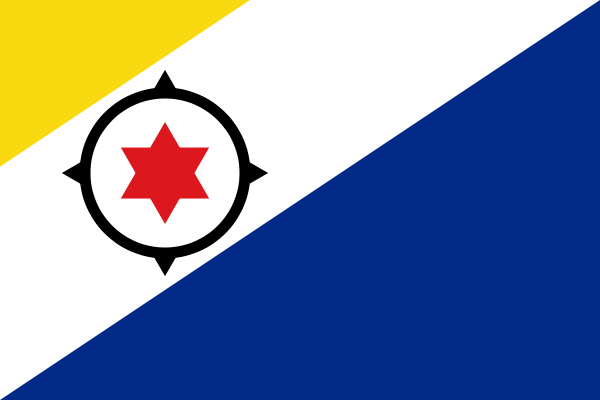
4. Bonaire and Curaçao


These flags were spotted at Muchowiec Airfield and stumped everyone, myself included.
The countries are island nations off the coast of Venezuela, and are part of the Dutch crown.

5. French Polynesia


A certain Tahitian religious sister ran into me and talked with me during one of those cultural workshops during the Żory festival. I met her and her group again later at Muchowiec Airfield.

French Polynesia is an overseas country (pays d'outre-mer) of the French Republic and is in the remote South Pacific, roughly halfway between New Zealand and Chile. The main island is Tahiti, made famous to the rest of the world by Paul Gauguin paintings. Getting to Poland from here is a real pain, requiring a series of flights transiting at Santiago, Rio de Janeiro, and Paris. Some of the people there are descendants of Chinese immigrants.

6. Cabo Verde


Spotted at Auschwitz II and also later in Kraków.
These people live on a group of islands off the coast of West Africa, and speak Portuguese.

7. University of Nebraska-Lincoln

Photo Credit: Kevin Clark

I ran into Fr. Benjamin Holdren (left in picture) of the Diocese of Lincoln while exiting the mosh at Błonia Park. Fr. Ben has helped me through tough times during my work stint at UNL last year, and also treated the parishoners to free donuts and coffee every Saturday after morning mass. One simply does not forget these things.

I said hi to him and went away too soon.

8. France and its traditional provinces

The French took a large proportion of pilgrims in this event and regional flags were one way of distinguishing between particular groups.


This is the "Gwenn-ha-du" (white-and-black) flags that identifies the Bretons, seemingly the largest group of French pilgrims.


This is Lorraine with a pretty flag featuring three weird-hawks.


The Corsicans used a variant of this flag with four of these Moor's heads around a red cross.
CORRECTION. Those aren't the Corsicans but the Sardinians, who come from a region of Italy

9. Canada and its provinces


Jeff Lockert, president of Catholic Christian Outreach, came from this province.
Spotted behind a wheelchair in Wadowice.


Québec people are French-speaking and that always gets me excited. They also have a nice flag.
Spotted at Wadowice.

10. Pairs of countries involved in ongoing vendettas but whose flags flew together nonetheless


The Mainland and Taiwanese groups came together to Poland and attended spiritual prep together before we found them, a fact which I found pretty cool. The Mainland is represented by groups from the Beijing, Handan and Macanese dioceses, among others (I hope). They had a bit of trouble coming because of paranoid bureaucrats and funny people showing up at their doorsteps begging them not to go.

I brought Pilgrim Kristin and her friend (both based in Bejing) to see my Archbishop. There we found out that she was a Teochew speaker. This reunion of sorts (Archbishop was also a Teochew speaker) took us all by surprise and cast a warm glow over the dusk at the airfield. One simply does not forget these things.

The Taiwan group was led by a Brazilian brother who spoke fluent Mandarin. He gave to me a foldable fan.


The Russian and Ukrainian flags were spotted flying side by side at Wawel Castle. Like, how cool is that?

A certain Father Laurentius from Flores serves in Volgograd and has been skulking about in Russia from the days of Perestroika. I tried to speak Indonesian with him, but failed. He recounted to Celine and myself about how the church has grown since the Soviet Union days, and invited us to visit him.

Father Laurentius was very boisterous, despite the crowd, and liked to shout Polish words at people. He had the dark skin and stout built of Flores men. I remembered the apparition of Our Lady at Larantuka, not too far away from his hometown, Maumere.

11. Easily confused flags leading to hilarious misunderstandings


The top flag is Hungary, where Pilgrim Julian studied for his Master's Degree and also home to my favourite classical composer (Béla Bartók) and many of the most badass mathematicians in history.

The bottom flag is Italy, where 95% of the pilgrims seem to have come from, so mistaking Hungarians for Italians was quite understandable (though not any less embarrassing).

12. Finland and Iceland


These two groups were small and stuck with each other at Błonia Park during Opening Mass and Papal Welcome. The Finnish group was made up entirely of Filipina ladies from St. Mary's Parish, where I called home for three months, four years ago. I asked them about the parish priest, Fr. Rafał Czernia, but they replied that he was somewhere else in the park.

I asked Oletekko Suomalainen? to one of the Icelandic priests by mistake. He laughed, and then redirected me to the ladies at the Finnish banner. But I still failed, because by then my Finnish language is close to nonexistence.

My favourite author of all time (Halldór Laxness) was an Icelander and also a Catholic for a period of time. One of the rooms at his house at Mosfellsbær, which is now a museum, has a blessing from St. JP2 hanging on the wall. One simply does not forget such things.

13. Sweden


I met the Swedish pilgrims during the mosh after Opening Mass. They were a group of girls from Uppsala. I tried my Swedish on them for two lines, but in the end English was still more practical for communication. Such is life.

14. Pakistan and Bangladesh


I remembered hearing before the trip that the pilgrims who wished to come to Poland from Pakistan and Bangladesh had had their visa applications rejected. However, during one of the moshes in Kraków, I saw these two banners being unfurled again. Good for them. They probably found a way to apply from a third country, like what the Syrian pilgrims did.

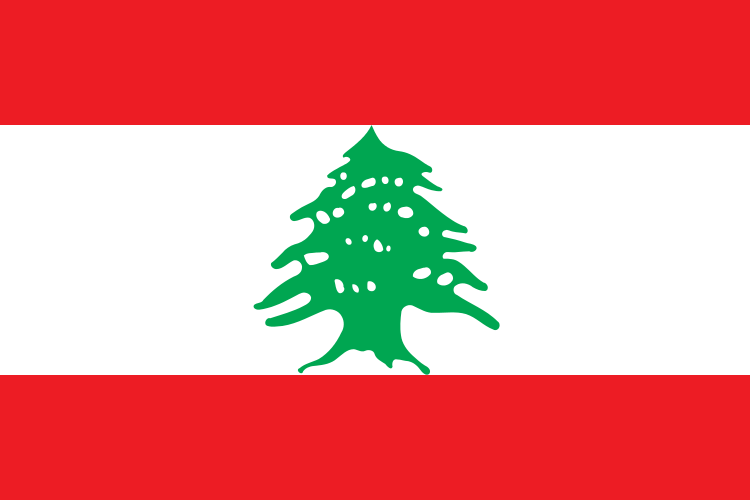
15. Lebanon (also Syria)


The dude who bore the Lebanese flag turned out to be from Syria; from Aleppo, a beautiful town. He had managed to come to World Youth Day after applying for his visa in Dubai, because nothing works any longer in Syria. After a while he looked very sad and did not want to talk about anything anymore.

16. Barbados


Note: Barbados is secretly Atlantis.
Spotted at Muchowiec Airfield.

17. Slovenia


Spotted at Campus Misericordiae.

The Slovenians performed an act of charity during the Vigil and Closing Mass. They set up shop at the boggiest corner of our sector and made a cordon of bottles and sticks and raffia strings to prevent the others from stepping into the mud by accident. One simply does not forget such things.

18. Costa Rica


The favourite stereotype bore by the Costa Ricans was the exclamation ¡pura vida! and you could yell that at them just to make them happy.

Sr. Cecilia, who journeyed with a group of us on a mission trip to Tagaytay 2 years ago, is based here now, and probably speaks flawless Spanish.

19. Honduras


Pilgrim Laura from Honduras sat next to me on the flight from Warsaw to London, and we commiserated on the sad state of Polish public transport. Pilgrim Laura studies in medical school in San Pedro Sula. She loves her country, and thinks it beautiful. We talked about many other things.

20. Belarus


This is the flag of Belarus, a country bordering Poland to the east and the last European country (for now) to host a mad dictator.


The Belarusian contingent at Campus Misericordiae also uses the white-red-white variant of the flag, which is interesting, considering the fact that it is used as a protest flag.
During Vigil Night, I shared a most blessed moment with the Belarusian youth, religious sisters, and priests in a tent where the Blessed Sacrament had been exposed.

At first, I had scant intention of going for adoration. I went into the tent really just to keep myself warm in the night, where the alternative was to sleep out in the field without a sleeping bag. I had thought (prayed) a little about it and reasoned that by not bringing a sleeping bag to the Campus, I had in fact betrayed a deeper desire to keep the vigil rather than to get any sleep. I prepared myself with coffee and a warm tub of pierogis from the stall.

I began kneeling outside of the tent entrance, careful to step around the sleeping men next to the tent (who must be so lucky to sleep there, close enough to be dreaming of Jesus even!). I followed the Divine Mercy chaplet sung in a strange language which I assumed to be Polish until I managed to obtain a lyrics sheet.

All the lyrics were in the Cyrillic alphabet. I could not contain my glee.
On closer examination, I spotted the letters
Іі and Ўў
which indicate Belarusian.

The nicest thing about Belarusian spelling is that words are pronounced exactly like they are spelt, in contrast to Russian.

The songs themselves were beautiful and I sang along whenever I could. I made notes on my sheet on which of the songs were sung, for future reference. I even made a few discreet voice recordings. I have never been able to find many of these songs again in recorded form. The songs were probably really just meant to stay with me for the moment only. Such is life.

I expressed profuse gratitude to one of the guys (Pilgrim Viktor, if I remember correctly) who played guitar. I asked to keep one sheet of lyrics and in return I gave him a medallion with an image of the Cathedral of the Good Shepherd embossed behind. And the sunrise happened and shone upon the altar and shone upon the Blessed Sacrament.

I used to like to think that I am leading Him by the hand and going to people in need of him. Now I knew that it was He who has been leading me by the hand after all. He led me into this wonderful place and among these wonderful people and I had no idea what was in store for me. What have I done after all? I had only prayed a little, and then watched from the back seat as the scenery unfolded before my eyes.

After this relevation happened, I took some time to collect myself and prepared for Closing Mass. And the Holy Father breezed by in his buggy and life returned to normal soon enough. Just Kidding.